Running a small business is no small feat. Juggling customers, sales, and operations can feel overwhelming—until you discover the right CRM software for small business. It’s not just a tool; it’s your secret weapon for smarter growth.






Why CRM Software for Small Business Is a Game-Changer

Customer Relationship Management (CRM) software has evolved from a luxury for large corporations to an essential tool for small businesses. In today’s competitive market, managing customer interactions efficiently can mean the difference between thriving and merely surviving. A well-implemented CRM system centralizes customer data, streamlines communication, and enhances sales productivity.
Centralized Customer Data for Smarter Decisions
One of the most significant advantages of CRM software for small business is the ability to store all customer information in one secure, accessible location. This includes contact details, purchase history, communication logs, and support tickets. Instead of sifting through spreadsheets or scattered emails, teams can instantly access a 360-degree view of each customer.
- Reduces duplication of efforts across departments
- Improves response times to customer inquiries
- Enables personalized marketing and sales outreach
According to a study by Nucleus Research, businesses gain an average return of $8.71 for every dollar spent on CRM, thanks to improved data utilization and workflow automation.
Enhanced Customer Experience and Retention
Customer retention is often more cost-effective than acquisition. CRM software helps small businesses nurture relationships by tracking customer preferences and behaviors. Automated follow-ups, birthday greetings, and targeted promotions make clients feel valued.
“A satisfied customer is the best business strategy of all.” – Michael LeBoeuf
With CRM tools, small businesses can proactively address issues, anticipate needs, and deliver consistent service across all touchpoints—email, phone, social media, and live chat.
Top 7 CRM Software for Small Business in 2024
Choosing the right CRM can be daunting with so many options available. To simplify your decision, we’ve curated a list of the seven most effective CRM software for small business, based on features, pricing, ease of use, and scalability.
1. HubSpot CRM
HubSpot CRM stands out for its user-friendly interface and robust free plan. It’s ideal for startups and growing businesses that want powerful features without a steep learning curve.
- Free forever plan with contact management, email tracking, and deal pipelines
- Seamless integration with Gmail, Outlook, and HubSpot’s marketing tools
- Automation for tasks, email sequences, and lead scoring
HubSpot’s ecosystem grows with your business, offering paid tiers for sales, marketing, and service hubs. Learn more at HubSpot CRM.
2. Zoho CRM
Zoho CRM is a versatile platform that combines affordability with advanced features. It’s particularly strong in automation and AI-powered insights.
- AI assistant (Zia) for predictive lead scoring and activity recommendations
- Customizable workflows and approval processes
- Multi-channel communication (email, phone, social, chat)
Zoho CRM integrates with over 40 Zoho applications and 500+ third-party tools. Its pricing starts as low as $14/user/month. Explore it at Zoho CRM.
3. Salesforce Essentials
Salesforce, a global leader in CRM, offers Salesforce Essentials tailored specifically for small businesses. It brings enterprise-grade functionality to smaller teams.
- Simple setup with pre-built sales processes
- Mobile app for on-the-go access
- Integration with email, calendar, and file storage
While slightly more expensive than others, its scalability makes it a smart long-term investment. Visit Salesforce Essentials for details.
4. Freshsales (by Freshworks)
Freshsales is known for its intuitive design and built-in phone and email capabilities. It’s perfect for sales-driven small businesses.
- Click-to-call and email tracking without third-party plugins
- Visual deal pipeline with drag-and-drop functionality
- AI-based lead prioritization (Freddy AI)
Freshsales offers a free plan for up to 3 users and paid plans starting at $15/user/month. Check it out at Freshsales.
5. Pipedrive
Pipedrive is built for sales teams that want to focus on the sales pipeline. Its visual interface makes it easy to track deals and forecast revenue.
- Drag-and-drop pipeline management
- Activity reminders and automation
- Strong reporting and forecasting tools
Pipedrive is especially popular among startups and solo entrepreneurs. Plans start at $14.90/user/month. Learn more at Pipedrive.
6. Insightly
Insightly combines CRM with project management, making it ideal for service-based small businesses like consultants, contractors, and agencies.
- Project and task tracking within the CRM
- Relationship linking to map customer networks
- Workflow automation and email integration
It supports both sales and operations, reducing the need for multiple tools. Pricing starts at $29/user/month. Visit Insightly for more.
7. Agile CRM
Agile CRM offers an all-in-one solution with marketing, sales, and service features. It’s a great choice for businesses looking to consolidate tools.
- Free plan with contact management, telephony, and email campaigns
- Website tracking and lead scoring
- Task management and calendar sync
While the free plan is feature-rich, some users report slower customer support. Paid plans start at $9.99/user/month. Explore at Agile CRM.
Key Features to Look for in CRM Software for Small Business
Not all CRM systems are created equal. When evaluating CRM software for small business, focus on features that align with your goals, team size, and industry.
1. Contact and Lead Management
The foundation of any CRM is its ability to organize contacts and leads. Look for tools that allow you to segment contacts, track interactions, and score leads based on engagement.
- Custom fields for industry-specific data
- Duplicate detection and merge tools
- Import/export capabilities from spreadsheets
Effective lead management ensures no opportunity falls through the cracks.
2. Sales Pipeline and Deal Tracking
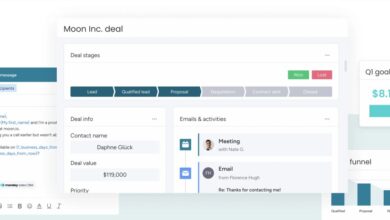
A visual sales pipeline helps teams understand where each deal stands. CRM software for small business should offer customizable stages, deal values, and probability tracking.
“What gets measured gets managed.” – Peter Drucker
Advanced features include forecasting, pipeline reports, and win/loss analysis to refine sales strategies.
3. Automation and Workflow Tools
Time is a precious resource for small businesses. Automation reduces manual tasks like data entry, follow-up emails, and task assignments.
- Automated email sequences based on triggers
- Task assignment when a deal moves stages
- Reminders for calls, meetings, and deadlines
Automation not only saves time but also ensures consistency in customer communication.
4. Mobile Accessibility
Small business owners are often on the move. A mobile-friendly CRM or dedicated app allows access to customer data, updates, and communications from anywhere.
- Offline access and sync capabilities
- Mobile calling and email integration
- Push notifications for important updates
Mobile CRM usage has increased by 40% since 2020, according to Statista, highlighting its growing importance.
5. Integration Capabilities
Your CRM shouldn’t exist in isolation. It should integrate seamlessly with tools you already use—email, calendar, accounting software, and marketing platforms.
- Native integrations with Gmail, Outlook, Slack, and Zoom
- API access for custom integrations
- Marketplace for third-party apps (e.g., Mailchimp, QuickBooks)
For example, integrating your CRM with Zapier can automate workflows across hundreds of apps without coding.
How to Choose the Right CRM Software for Small Business
Selecting the best CRM software for small business requires careful consideration of your unique needs, budget, and growth plans.
Assess Your Business Needs
Start by identifying your pain points. Are you losing leads? Struggling with follow-ups? Need better reporting? Define your goals before evaluating software.
- Map out your sales process from lead to close
- Determine which departments will use the CRM (sales, marketing, support)
- List must-have features vs. nice-to-have ones
This clarity will prevent overspending on unnecessary features.
Consider Scalability and Future Growth
Choose a CRM that can grow with your business. A tool that works for 5 users may not support 50. Look for tiered pricing, modular features, and cloud-based architecture.
CRM Software for Small Business – CRM Software for Small Business menjadi aspek penting yang dibahas di sini.
- Can it handle increased data volume?
- Does it offer advanced analytics as you scale?
- Is there a mobile app for remote teams?
Scalability ensures long-term value and reduces the need for migration later.
Evaluate User Experience and Training
The best CRM is the one your team actually uses. A complex system with a steep learning curve can lead to low adoption.
- Look for intuitive dashboards and navigation
- Check for onboarding resources (tutorials, webinars, support)
- Test the software with a free trial or demo
HubSpot, for instance, offers free CRM training courses through HubSpot Academy, helping teams get up to speed quickly.
Implementing CRM Software for Small Business: Best Practices
Implementing a CRM is more than just installing software—it’s a strategic shift in how your team manages customer relationships.
Start with a Clear Implementation Plan
Define roles, timelines, and success metrics. Assign a CRM champion or project manager to oversee the rollout.
- Import clean, organized data to avoid clutter
- Customize fields and pipelines to match your workflow
- Set up user permissions and access levels
A structured plan minimizes disruptions and ensures a smooth transition.
Train Your Team Thoroughly
Even the best CRM software for small business fails without proper training. Invest time in onboarding sessions and provide ongoing support.
- Conduct hands-on workshops
- Create internal documentation or cheat sheets
- Encourage feedback and address concerns promptly
According to Salesforce, companies with effective CRM training see 40% higher user adoption rates.
Migrate Data Carefully
Data migration is a critical step. Avoid importing outdated or duplicate records.
- Clean your existing data before migration
- Use CSV imports or integration tools
- Test a small batch before full migration
Many CRM providers offer migration assistance or partner with data specialists.
Common Challenges and How to Overcome Them
While CRM software for small business offers immense benefits, implementation isn’t without challenges.
Low User Adoption
One of the biggest hurdles is getting team members to use the CRM consistently.
- Involve users in the selection process
- Highlight personal benefits (e.g., easier task tracking)
- Set usage expectations and monitor compliance
Leadership buy-in is crucial—when managers use the CRM, teams are more likely to follow.
Data Overload and Poor Data Quality
Without proper management, CRMs can become cluttered with outdated or irrelevant information.
- Establish data entry standards
- Regularly audit and clean data
- Use automation to reduce manual input
High-quality data leads to better insights and decision-making.
Integration Issues
Some CRMs struggle to connect with existing tools, leading to data silos.
- Choose CRMs with strong integration ecosystems
- Use middleware like Zapier or Make (formerly Integromat)
- Consult IT or integration specialists if needed
Seamless integration ensures data flows smoothly across platforms.
The Future of CRM Software for Small Business
CRM technology is evolving rapidly, driven by AI, automation, and customer expectations.
AI and Predictive Analytics
AI-powered CRM tools can predict customer behavior, recommend next steps, and automate responses. For example, Zia in Zoho CRM analyzes past interactions to suggest the best time to contact a lead.
- AI chatbots for instant customer support
- Predictive lead scoring to prioritize high-value prospects
- Natural language processing for sentiment analysis
These features help small businesses compete with larger players by making smarter, faster decisions.
Increased Focus on Customer Experience
Modern CRM systems are shifting from sales-centric to customer-centric models. They now include tools for managing the entire customer journey—from awareness to advocacy.
- Customer feedback and survey tools
- Service ticketing and knowledge bases
- Net Promoter Score (NPS) tracking
As customer expectations rise, CRM software for small business must support end-to-end experience management.
Cloud-Based and Remote-Friendly Solutions
The rise of remote work has accelerated the demand for cloud-based CRM systems. These allow teams to collaborate in real-time from anywhere.
- Real-time data syncing across devices
- Secure access with multi-factor authentication
- Scalable infrastructure without on-premise servers
Cloud CRM adoption among small businesses grew by 35% in 2023, according to Gartner.
What is CRM software for small business?
CRM software for small business is a digital tool that helps manage customer interactions, track sales leads, and streamline marketing efforts. It centralizes customer data to improve communication, boost sales, and enhance customer service.
Is CRM software worth it for small businesses?
Yes, CRM software is highly valuable for small businesses. It increases efficiency, improves customer retention, and provides data-driven insights that support growth. Many CRMs offer affordable or free plans tailored to small teams.
Can I use CRM software without technical skills?
Absolutely. Most modern CRM software for small business is designed with user-friendliness in mind. Platforms like HubSpot CRM and Zoho CRM offer intuitive interfaces, drag-and-drop features, and extensive support resources, making them accessible even to non-technical users.
How much does CRM software cost for small businesses?
Costs vary widely. Many CRMs offer free plans (e.g., HubSpot, Agile CRM). Paid plans typically range from $10 to $50 per user per month, depending on features and scalability.
How do I migrate my data to a new CRM?
Data migration involves exporting your current customer data (usually from spreadsheets or old systems), cleaning it, and importing it into the new CRM via CSV or integration tools. Most CRM providers offer step-by-step guides, and some provide migration support services.
Choosing the right CRM software for small business is a strategic decision that can transform how you engage with customers and grow your revenue. From HubSpot’s free plan to Salesforce’s enterprise-ready tools, there’s a solution for every budget and need. Focus on ease of use, essential features, and scalability. Implement it with a clear plan, train your team, and maintain data quality. As AI and cloud technologies advance, CRM systems will become even more powerful, helping small businesses compete and thrive. The future of customer relationships is digital—make sure you’re ready.
CRM Software for Small Business – CRM Software for Small Business menjadi aspek penting yang dibahas di sini.
Further Reading: