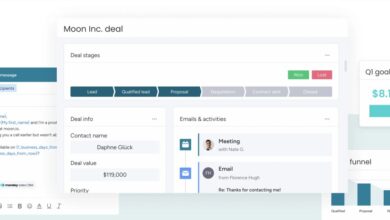
In today’s fast-paced digital world, small businesses need every advantage to stay competitive. Sales CRM software for small business isn’t just a luxury—it’s a necessity. It streamlines customer interactions, boosts sales efficiency, and drives growth—all without breaking the bank.






Why Sales CRM Software for Small Business is a Game-Changer

Small businesses often operate with limited resources, making efficiency crucial. A Sales CRM software for small business acts as a centralized hub for managing customer data, tracking interactions, and automating repetitive tasks. This isn’t just about organizing contacts—it’s about transforming how you engage with customers.
Centralized Customer Data Management
One of the biggest challenges for small businesses is scattered customer information. Emails, spreadsheets, sticky notes—this fragmented approach leads to missed opportunities. A Sales CRM software for small business consolidates all customer data into one secure platform.
- Store contact details, purchase history, and communication logs in one place.
- Access real-time customer insights from any device.
- Eliminate data duplication and human errors.
“A CRM system can increase sales by up to 29% by improving lead tracking and follow-up efficiency.” — Nucleus Research
Improved Sales Team Collaboration
When your sales team works in silos, opportunities slip through the cracks. CRM software breaks down these barriers by enabling seamless collaboration. Team members can view deal progress, assign tasks, and share notes—all within the same system.
- Assign leads to specific team members with automated workflows.
- Track team performance with built-in analytics.
- Enable managers to monitor pipelines and forecast revenue accurately.
Top 7 Sales CRM Software for Small Business in 2024
Choosing the right CRM can be overwhelming. To help you make an informed decision, we’ve analyzed the top 7 Sales CRM software for small business based on features, pricing, ease of use, and scalability.
1. HubSpot CRM
HubSpot CRM is a favorite among small businesses for its intuitive interface and powerful free tier. It offers robust contact management, email tracking, and deal pipeline visualization.
- Free forever plan with essential CRM features.
- Seamless integration with Gmail and Outlook.
- Advanced automation and reporting in paid tiers.
HubSpot also provides educational resources through HubSpot Academy, helping small teams master CRM best practices.
2. Zoho CRM
Zoho CRM stands out for its affordability and customization. It’s ideal for small businesses that need flexibility without sacrificing functionality.
- AI-powered sales assistant (Zia) for predictive forecasting.
- Customizable sales pipelines and workflows.
- Strong mobile app for on-the-go access.
Zoho integrates with over 40 business applications, making it a versatile choice. Learn more at Zoho CRM’s official site.
3. Salesforce Essentials
Salesforce, a leader in CRM technology, offers Salesforce Essentials specifically designed for small teams. It brings enterprise-level power to small businesses.
- 360-degree view of customers with activity timelines.
- Automated data entry and task reminders.
- Real-time sales forecasting and reporting.
Salesforce’s ecosystem is vast, and small businesses can scale seamlessly. Explore it at Salesforce Essentials.
4. Freshsales (by Freshworks)
Freshsales combines AI-driven insights with a user-friendly interface. It’s perfect for small sales teams looking to automate lead scoring and follow-ups.
- Visual deal pipeline with drag-and-drop functionality.
- AI-based lead prioritization.
- Integrated phone and email within the CRM.
Freshsales also offers a free plan for up to 3 users. Visit Freshworks CRM for details.
5. Pipedrive
Pipedrive is built for sales-focused teams. Its strength lies in its visual sales pipeline, making it easy to track deals from prospect to close.
- Drag-and-drop pipeline management.
- Automated workflow triggers and reminders.
- Robust reporting and forecasting tools.
Pipedrive is especially popular among startups and small sales teams. Check it out at Pipedrive’s website.
6. Insightly
Insightly bridges CRM and project management, making it ideal for small businesses managing complex customer journeys.
- Project and task tracking within the CRM.
- Relationship linking to map customer networks.
- Workflow automation for lead nurturing.
It’s a great fit for service-based businesses. Learn more at Insightly CRM.
7. Capsule CRM
Capsule CRM is a simple, no-frills solution for small businesses that want straightforward contact and sales tracking.
- Easy-to-use interface with minimal learning curve.
- Integrates with Google Workspace and Mailchimp.
- Task and opportunity management features.
Capsule is perfect for solopreneurs or teams under 10. Explore it at Capsule CRM.
Key Features to Look for in Sales CRM Software for Small Business
Not all CRM systems are created equal. When evaluating Sales CRM software for small business, focus on features that deliver real value without complexity.
Contact and Lead Management
The foundation of any CRM is its ability to manage contacts and leads effectively.
- Automated lead capture from web forms and emails.
- Duplicate detection and merge tools.
- Custom fields to store business-specific data.
Sales Pipeline and Deal Tracking
A visual pipeline helps sales teams understand where each deal stands.
- Customizable stages (e.g., Prospect, Qualified, Negotiation, Closed).
- Drag-and-drop deal movement.
- Deal value and probability tracking.
Automation and Workflow Tools
Automation saves time and reduces human error.
- Automated email follow-ups based on triggers.
- Task assignment when a deal moves to a new stage.
- Scheduled reminders for calls or meetings.
How Sales CRM Software for Small Business Boosts Revenue
Investing in a CRM isn’t just about organization—it directly impacts your bottom line.
Shorter Sales Cycles
With better lead tracking and follow-up automation, deals move faster through the pipeline.
- Automated reminders ensure no lead goes cold.
- Sales reps spend less time on admin and more on selling.
- Real-time insights help prioritize high-value opportunities.
Higher Conversion Rates
CRM systems help nurture leads with personalized communication.
- Track customer behavior and preferences.
- Send targeted emails based on lifecycle stage.
- Use AI to predict which leads are most likely to convert.
Improved Customer Retention
Acquiring a new customer costs 5–25x more than retaining an existing one.
- Log all customer interactions for better service.
- Set up renewal reminders for subscription-based businesses.
- Identify upsell opportunities through purchase history.
Implementation Tips for Sales CRM Software for Small Business
Even the best CRM fails without proper implementation. Follow these steps to ensure success.
Start with Clear Goals
Define what you want to achieve: faster follow-ups, better reporting, or improved team collaboration.
- Map your current sales process before migrating.
- Identify pain points the CRM should solve.
- Set measurable KPIs (e.g., 20% increase in lead response time).
Train Your Team Effectively
User adoption is critical. A CRM is only as good as the team using it.
- Provide hands-on training sessions.
- Assign a CRM champion within the team.
- Use video tutorials and knowledge bases.
Migrate Data Carefully
Poor data migration can derail your CRM rollout.
- Clean your existing data before importing.
- Use CSV imports or integration tools.
- Test with a small dataset first.
Common Mistakes to Avoid with Sales CRM Software for Small Business
Many small businesses make avoidable errors when adopting CRM software.
Over-Customizing Too Early
While customization is powerful, overdoing it early can complicate adoption.
- Start with default settings and basic workflows.
- Iterate based on user feedback.
- Avoid building complex automations before understanding usage patterns.
Ignoring Mobile Access
Sales happen on the go. A CRM without a strong mobile app limits usability.
- Ensure the CRM has a reliable iOS and Android app.
- Test mobile features like offline access and voice notes.
- Encourage field reps to update deals in real time.
Not Integrating with Other Tools
A standalone CRM creates data silos. Integration is key.
- Connect your CRM with email, calendar, and accounting software.
- Use Zapier or native integrations to automate data flow.
- Sync with marketing tools like Mailchimp or HubSpot.
Future Trends in Sales CRM Software for Small Business
The CRM landscape is evolving rapidly. Small businesses that stay ahead of trends gain a competitive edge.
AI and Predictive Analytics
AI is no longer just for enterprises. Modern CRM systems use AI to predict customer behavior.
- AI-powered lead scoring identifies high-potential prospects.
- Predictive forecasting helps set realistic sales targets.
- Natural language processing (NLP) extracts insights from emails and calls.
Increased Automation and No-Code Workflows
Small businesses can now automate complex processes without coding.
- Drag-and-drop workflow builders.
- Automated follow-up sequences based on triggers.
- Self-service portals for customers.
Enhanced Customer Experience (CX) Focus
CRMs are shifting from sales tools to customer experience platforms.
- Unified view of customer interactions across channels.
- Feedback collection and sentiment analysis.
- Personalized engagement based on behavior.
What is the best Sales CRM software for small business under $20 per user?
For under $20 per user, Zoho CRM and Freshsales offer the best balance of features and affordability. Both provide robust automation, mobile access, and integrations. HubSpot CRM also has a powerful free plan ideal for startups.
Can a Sales CRM software for small business integrate with email?
Yes, most modern CRM systems integrate seamlessly with Gmail and Outlook. They allow you to track emails, log conversations automatically, and send emails directly from the CRM interface, ensuring all communication is recorded.
How long does it take to implement a CRM in a small business?
Implementation time varies, but most small businesses can set up a basic CRM in 1–2 weeks. Factors include data migration complexity, team size, and training needs. Using templates and starting with core features speeds up the process.
Do I need technical skills to use Sales CRM software for small business?
No, most CRM platforms are designed for non-technical users. They feature intuitive dashboards, drag-and-drop tools, and guided setup wizards. Providers like HubSpot and Zoho also offer extensive support and tutorials.
Is cloud-based CRM safe for small businesses?
Yes, reputable cloud-based CRM providers use enterprise-grade security, including encryption, two-factor authentication, and regular backups. They often offer better security than on-premise systems, especially for small businesses without dedicated IT teams.
Choosing the right Sales CRM software for small business is one of the most impactful decisions you can make. From HubSpot’s free tier to Salesforce’s scalability, the options are vast. Focus on ease of use, essential features, and integration capabilities. Avoid common pitfalls like over-customization and poor training. As AI and automation evolve, CRM systems will become even more powerful allies in driving growth. The future of small business sales isn’t just about working harder—it’s about working smarter with the right tools.
Sales CRM software for small business – Sales CRM software for small business menjadi aspek penting yang dibahas di sini.
Further Reading: